Tag: passive investing

  • How to Retire Early with ETF: Your 2026 Complete Guide

    Quick Answer

    The FIRE movement targets financial independence at a savings rate of 50–70% of income, typically achievable in 10–15 years. The 4% safe withdrawal rule allows $40,000/year of spending from a $1M portfolio. Every 10% increase in savings rate cuts working years by 3–5 years.

    The FIRE (Financial Independence, Retire Early) movement is a financial philosophy focused on extreme savings and investment — typically 50–70% of income — to accumulate enough assets to live indefinitely off investment returns, typically before traditional retirement age.
    Quick Answer

    The FIRE movement targets financial independence at a savings rate of 50–70% of income, typically achievable in 10–15 years. The 4% safe withdrawal rule allows $40,000/year of spending from a $1M portfolio. Every 10% increase in savings rate cuts working years by 3–5 years.

    The FIRE (Financial Independence, Retire Early) movement is a financial philosophy focused on extreme savings and investment — typically 50–70% of income — to accumulate enough assets to live indefinitely off investment returns, typically before traditional retirement age.

    How to retire early with ETF investing

    Quick Answer: Retiring early with ETFs is achievable through consistent investing in low-cost index funds, a high savings rate, and following the 4% withdrawal rule. Most people can retire 10–20 years early by investing 30–50% of their income in diversified ETFs.

    What Is ETF-Based Early Retirement?

    Exchange-Traded Funds (ETFs) have transformed how ordinary people build wealth. Unlike expensive actively managed funds, ETFs passively track indexes like the S&P 500 — giving you lower fees, broader diversification, and historically strong returns averaging 7–10% annually. Paired with the FIRE (Financial Independence, Retire Early) movement, ETF investing is the most accessible path to early retirement for the average person.

    Looking for more tips? Check out our guide on Best ETF Funds for Beginners in 2026: VTI, VOO, SCHD Compared.

    The 4% Rule: Your Retirement Calculation

    The 4% rule states that you can safely withdraw 4% of your portfolio each year without running out of money over a 30+ year retirement. Your FIRE number — the portfolio size you need — is simply your annual expenses multiplied by 25.

    • Annual expenses $40,000 → FIRE number: $1,000,000
    • Annual expenses $50,000 → FIRE number: $1,250,000
    • Annual expenses $60,000 → FIRE number: $1,500,000

    Best ETFs for Early Retirement 2026

    VTI — Vanguard Total Stock Market ETF

    Covers 3,800+ U.S. stocks with a 0.03% expense ratio. The gold standard for long-term early retirement portfolios. Historical return: ~10% annually.

    VXUS — Vanguard Total International ETF

    Adds global diversification outside the U.S. A 70% VTI / 30% VXUS split gives you worldwide market exposure.

    VOO — Vanguard S&P 500 ETF

    Tracks America’s 500 largest companies. Simpler than VTI with similar performance over most periods. A strong core holding.

    BND — Vanguard Total Bond Market ETF

    Add bonds as you approach your retirement date to reduce portfolio volatility. Recommended allocation: 90/10 stocks-bonds early on, shifting to 70/30 near retirement.

    Stop Leaving Affiliate Income on the Table

    Most bloggers place Coupang links randomly and earn almost nothing. This guide shows exactly where to place them — so your blog earns while you sleep.

    Get the Guide →

    How Much to Invest Monthly

    Assuming 8% average annual returns, here’s what consistent monthly investing achieves:

    • $1,000/month for 20 years → ~$589,000
    • $2,000/month for 15 years → ~$693,000
    • $3,000/month for 12 years → ~$653,000
    • $4,000/month for 10 years → ~$735,000

    The math is clear: a higher savings rate beats a higher salary for reaching early retirement faster.

    Step-by-Step: Build Your ETF Retirement Portfolio

    Step 1: Max Out Tax-Advantaged Accounts First

    Contribute to your 401(k) up to the employer match, then max out a Roth IRA ($7,000 in 2026). Tax-free growth dramatically increases your long-term returns compared to taxable accounts.

    Step 2: Choose a Simple Three-Fund Portfolio

    Start with 60% VTI + 30% VXUS + 10% BND. This single allocation gives you broad diversification across thousands of companies worldwide at minimal cost.

    Step 3: Automate Monthly Contributions

    Set up automatic transfers to your investment account on payday. Dollar-cost averaging — investing fixed amounts regularly regardless of market conditions — consistently outperforms trying to time the market.

    Step 4: Reinvest All Dividends

    Enable automatic dividend reinvestment (DRIP). Reinvesting dividends compounds your growth exponentially — the difference between reinvesting and taking dividends as cash is enormous over 15–20 years.

    Step 5: Track and Rebalance Annually

    Review your allocation once per year and rebalance if it drifts more than 5% from your target. Most brokerages offer automatic rebalancing tools.

    How Your Savings Rate Determines Retirement Timeline

    • Savings rate 10% → ~43 years to retirement
    • Savings rate 25% → ~32 years to retirement
    • Savings rate 50% → ~17 years to retirement
    • Savings rate 70% → ~8.5 years to retirement

    This is why cutting expenses is often more powerful than earning more — increasing your savings rate from 20% to 40% cuts your retirement timeline nearly in half.

    Risks to Plan For

    Sequence of returns risk: A major market crash in your first few retirement years is the biggest danger. Maintain a 1–2 year cash buffer to avoid selling during downturns. Healthcare costs: Retiring before 65 means covering your own health insurance — budget $500–$800/month per person. Lifestyle inflation: Keeping lifestyle costs stable is essential to maintaining your FIRE number’s accuracy.

    Frequently Asked Questions (FAQ)

    Can I retire early just by investing in ETFs?

    Yes. ETF investing combined with a high savings rate is the most proven path to early retirement. Millions of people in the FIRE community have achieved financial independence this way.

    Which ETF is best for early retirement?

    VTI (Vanguard Total Stock Market ETF) is the top choice for its ultra-low 0.03% expense ratio and broad U.S. market coverage. Pairing it with VXUS for international exposure is the most common FIRE portfolio strategy.

    How much do I need to retire at 45?

    Starting at age 30, you’d need to invest $2,500–$4,000 per month to build a $1–1.5 million portfolio by 45, assuming 8% returns. Reducing annual expenses lowers the target significantly.

    What is the biggest ETF early retirement mistake?

    Panic-selling during market downturns. A 30–40% market drop feels terrifying, but selling locks in permanent losses. Investors who stayed invested during the 2008 and 2020 crashes recovered fully within 2–3 years.

    Are ETF dividends taxed in early retirement?

    In the U.S., qualified dividends and long-term capital gains are taxed at 0% if your income is below ~$47,000 (single) or ~$94,000 (married) in 2026. Many early retirees pay zero federal tax on ETF income.

    📘 Want to go deeper?

    Get the full SAVYX ebook guides — proven strategies for blog income, AdSense, and AI monetization.

    👉 Browse SAVYX Ebooks on Gumroad


    Recommended: Top-rated budgeting & finance essentials — curated picks updated daily.

    This post contains affiliate links. I may earn a commission at no extra cost to you.

  • ETF Investing for Beginners: The Complete Guide to Building Wealth in 2026

    Quick Answer

    You don’t need thousands to start investing. $100 invested monthly in an S&P 500 index fund for 30 years at 8% average annual return grows to $148,000. Modern investing apps (Fidelity, Vanguard, Charles Schwab) have $0 minimums and commission-free trades. Starting early is the single most impactful investing decision.

    Beginning investing is the process of allocating money into financial assets — most commonly index funds, ETFs, or individual stocks — with the goal of generating returns over time through capital appreciation, dividends, or both.

    ETF investing for beginners can feel intimidating with all the financial jargon and endless fund options available. But ETFs — Exchange Traded Funds — are actually one of the simplest, most cost-effective investment vehicles ever created. This guide breaks down everything you need to know to start investing in ETFs confidently in 2026.

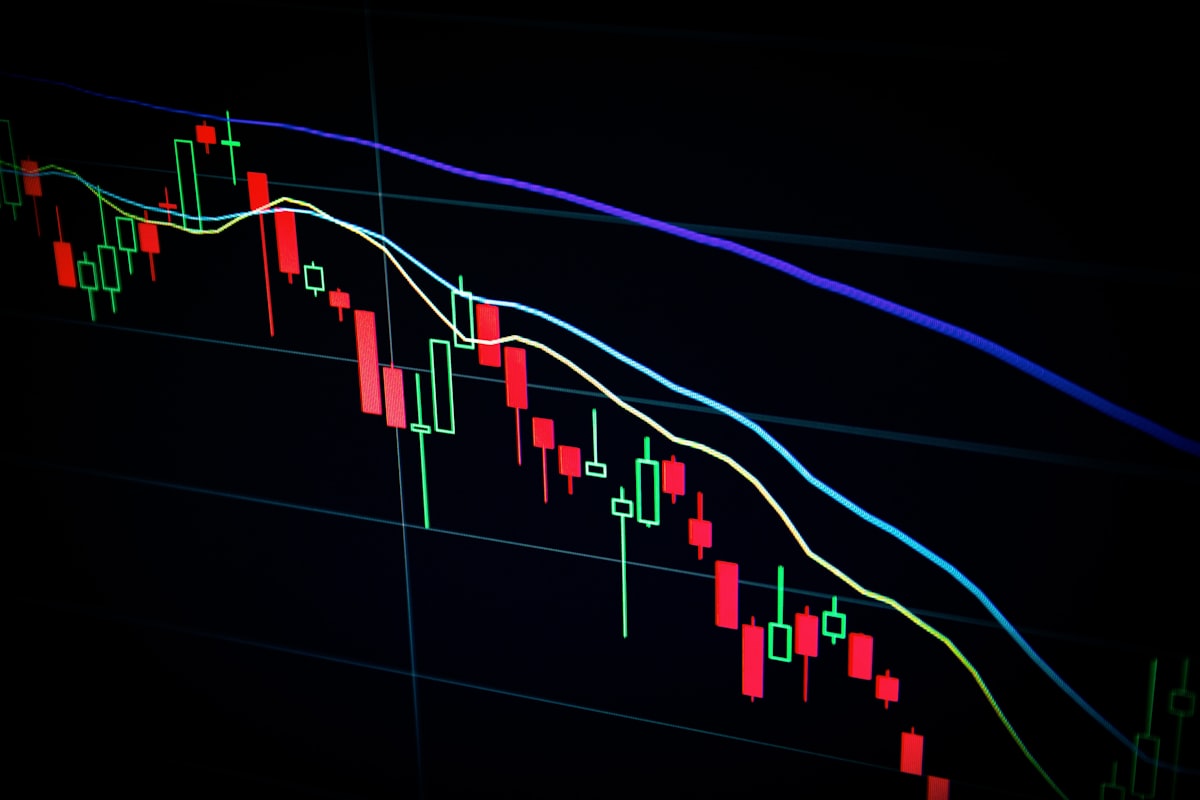
    Financial charts and graphs for ETF investing
    ETFs give individual investors access to diversified portfolios with minimal fees.

    What Is an ETF?

    An ETF (Exchange Traded Fund) is a basket of securities — stocks, bonds, or other assets — that trades on a stock exchange just like a single stock. When you buy one share of an S&P 500 ETF, you effectively own a tiny piece of 500 different companies simultaneously. This instant diversification is the fundamental advantage that makes ETFs ideal for beginner investors.

    Looking for more tips? Check out our guide on Best Budget Apps for Saving Money in 2026: Full Comparison.

    Unlike mutual funds, ETFs trade throughout the day at market prices, have significantly lower expense ratios, and are far more tax-efficient. These structural advantages make ETFs the preferred investment vehicle for the majority of personal finance experts today.

    Stop Leaving Affiliate Income on the Table

    Most bloggers place Coupang links randomly and earn almost nothing. This guide shows exactly where to place them — so your blog earns while you sleep.

    Get the Guide →

    Why ETFs Are Perfect for Beginners

    ETFs solve the three biggest problems new investors face. First, they provide instant diversification without requiring large capital — you can buy one ETF and own hundreds of companies. Second, their low fees mean more of your money stays invested and compounds over time. Third, they require no active management or stock-picking skill. You simply buy, hold, and let the market do the work over decades.

    Types of ETFs You Should Know

    1. Index ETFs

    The most popular type for beginners. These track a market index like the S&P 500, NASDAQ 100, or global indices. Examples include VOO (Vanguard S&P 500 ETF), QQQ (Invesco NASDAQ ETF), and VTI (Vanguard Total Stock Market ETF). Index ETFs have extremely low fees, typically 0.03 to 0.20 percent annually.

    2. Bond ETFs

    Provide exposure to government or corporate bonds. These add stability to a portfolio and typically move inversely to stock market volatility. Useful for investors who want to reduce overall portfolio risk as they approach retirement.

    3. Sector ETFs

    Focus on specific industries like technology, healthcare, or energy. These carry higher risk than broad market ETFs but offer targeted exposure to sectors you believe will outperform the general market.

    4. International ETFs

    Provide exposure to markets outside your home country. Useful for geographic diversification and capturing growth in emerging economies.

    📺 SAVYX Money & AI Guide

    How to Start Investing in ETFs: Step by Step

    Step 1: Choose a Brokerage Account

    Select a reputable brokerage with low fees, a user-friendly interface, and no account minimums. Most major brokerages including Fidelity, Schwab, and Vanguard offer commission-free ETF trading. For Korean investors, platforms like Kiwoom Securities, Samsung Securities, and MTS apps from major banks provide access to both domestic and US ETFs.

    Step 2: Determine Your Investment Amount

    You do not need large capital to start. Many ETFs trade at prices that allow you to begin with as little as $50 to $100. Some brokerages now offer fractional shares, meaning you can invest any dollar amount regardless of the ETF’s share price. Start with whatever amount you can commit to investing consistently every month.

    Step 3: Choose Your First ETF

    For most beginners, starting with a single broad market index ETF is the optimal strategy. VOO (S&P 500) or VTI (total US market) are the most commonly recommended starting points. These two funds have returned an average of 10 to 11 percent annually over the past 30 years. Once you are comfortable, you can add international exposure with a fund like VXUS.

    Step 4: Set Up Automatic Contributions

    Dollar-cost averaging — investing a fixed amount at regular intervals regardless of market conditions — consistently outperforms attempts to time the market. Set up automatic monthly contributions and stop watching the daily fluctuations. The market will have bad days, bad months, and occasionally bad years. Long-term investors who stay consistent through volatility build substantially more wealth than those who try to buy the dips and sell the peaks.

    Key ETF Metrics to Understand

    Before buying any ETF, check these critical metrics. The expense ratio is the annual fee deducted from your investment and should be as low as possible. Assets under management indicates fund size and liquidity — larger funds are generally safer and easier to trade. The tracking error measures how accurately the fund follows its target index. Volume indicates daily trading activity and affects how easily you can buy or sell at fair prices.

    Common ETF Investing Mistakes to Avoid

    New investors commonly make several preventable mistakes. Checking portfolio value daily creates anxiety and encourages emotional decisions. Chasing recently high-performing sectors leads to buying high and selling low. Holding too many overlapping ETFs creates false diversification without reducing risk. Selling during market downturns locks in losses and prevents recovery gains. And neglecting to rebalance your portfolio annually allows your asset allocation to drift from your intended risk level.

    What Returns Can You Realistically Expect?

    The S&P 500 has historically returned approximately 10 percent annually before inflation over long periods. After inflation, real returns average around 7 percent. This means an investment of $500 per month earning 7 percent annually grows to approximately $560,000 over 30 years. The power of compound returns over decades is genuinely extraordinary — the key variable is simply starting as early as possible and staying consistent.

    Conclusion: Start Your ETF Journey Today

    ETF investing for beginners is genuinely accessible in 2026. The combination of low fees, instant diversification, and simple buy-and-hold strategy makes ETFs the ideal foundation for any investment portfolio. Open a brokerage account this week, choose your first index ETF, set up automatic monthly contributions, and then let compound interest do the rest. Time in the market is always more valuable than trying to time the market.

    📘 Want to go deeper?

    Get the full SAVYX ebook guides — proven strategies for blog income, AdSense, and AI monetization.

    👉 Browse SAVYX Ebooks on Gumroad


    📚 Want more money tips and AI income strategies?
    Check out our Korean blog at SAVYX Tistory Blog for in-depth guides!


    Frequently Asked Questions (FAQ)

    What is a high-yield savings account?

    A high-yield savings account (HYSA) is a savings account that offers a much higher annual percentage yield (APY) than traditional bank accounts, often 10–15x the national average.

    Are high-yield savings accounts safe?

    Yes. Most high-yield savings accounts are FDIC-insured up to $250,000 per depositor, making them one of the safest places to store money.

    How much interest does a high-yield savings account earn?

    In 2026, the best HYSAs offer APYs of 4.5–5.25%. On $10,000, that earns $450–$525 per year with no risk.

    Can I lose money in a high-yield savings account?

    No. As long as your balance is under $250,000 and the account is FDIC-insured, you cannot lose your principal. The only risk is the interest rate changing.

    What is the difference between a HYSA and a regular savings account?

    The main difference is the interest rate. HYSAs offer 4–5% APY while regular bank savings accounts average 0.4–0.5% APY.


    Recommended: Top-rated budgeting & finance essentials — curated picks updated daily.

    This post contains affiliate links. I may earn a commission at no extra cost to you.